
If your symptoms are uncomfortable but not life threatening, a walk-in clinic is usually the faster and less expensive choice. Think sore throats, ear pain, minor cuts, sprains, rashes, and fevers in older kids and adults. The ER is for emergencies: chest pain, trouble breathing, signs of a stroke, or bleeding that will not stop. For those, call 911 or go straight to the nearest emergency room.
Most days fall somewhere in between, and that is where people get stuck. You feel awful, you want answers now, and you do not want to spend six hours in a waiting room for something that turns out to be strep. If you are not sure where you belong, give our team a call at (407) 713-6010. We will tell you honestly whether to come in or head to the ER.
What can a walk-in clinic treat the same day?
A walk-in clinic can treat most of the everyday illnesses and minor injuries that send people searching for help, usually in a single visit with no appointment. You walk in, get seen, and leave with a diagnosis and a plan.
That covers a lot of ground. Colds, flu, sinus infections, and sore throats. Ear infections and pink eye. Urinary tract infections. Rashes, bug bites, and mild allergic reactions without any swelling in the throat. Minor burns, small cuts, and sprains. Orlando adds its own list, too. A twisted ankle from jogging the loop around Lake Eola Park, a sunburn that blistered after a long day outside, or a stomach bug that hit halfway through a family vacation all fit squarely in walk-in territory.
At Premium Walk-In Clinic, we see residents and visitors alike, and we know how much a single sick day costs when you have work, school, or park tickets on the calendar. Getting seen quickly matters. So does getting a straight answer. If something we see points to a more serious problem, we will tell you and help you get to the right place.
When do symptoms mean you should go to the ER instead?
Go to the ER, or call 911, for anything that could threaten a life or a limb. That includes chest pain or pressure, severe trouble breathing, sudden weakness or drooping on one side of the face, confusion, a seizure, or a head injury with loss of consciousness.
A few other situations belong there too. Bleeding that keeps soaking through a bandage after steady pressure. A bone that is clearly out of place or pushing through the skin. Severe belly pain, especially on the lower right side. Swelling of the lips, tongue, or throat after a sting or a new food. A fever in a baby younger than three months. And in Orlando summers, heat matters. Heat exhaustion can often be managed with rest, shade, and fluids, but confusion, fainting, or hot dry skin after time outside can signal heatstroke, which is an emergency.
None of this is meant to scare you. Most people who wonder whether they need the ER do not. But when the warning signs are there, do not drive across town to a clinic first. Go to the closest emergency room. If you are staying near International Drive and are not sure where that is, ask your hotel front desk right away.
How do wait times and costs compare at a walk-in clinic and the ER?
For non-emergency problems, a walk-in clinic is generally faster and costs less than the ER. Emergency rooms see patients in order of severity, so a sprain or an earache often waits behind more critical cases.
That is why a minor complaint can turn into a long afternoon in an ER waiting room. A walk-in clinic is built for exactly those minor complaints, so you are not competing with car accident patients for a doctor's attention. Add Orlando traffic to the picture, with I-4 backed up at almost any hour, and a nearby clinic you can reach quickly starts to look even better.
Cost follows the same pattern. ER visits are priced for emergency level resources, and insurance plans often charge higher copays for them than for urgent or walk-in care. Visitors with out of state insurance can call ahead and ask whether we work with their plan before coming in.
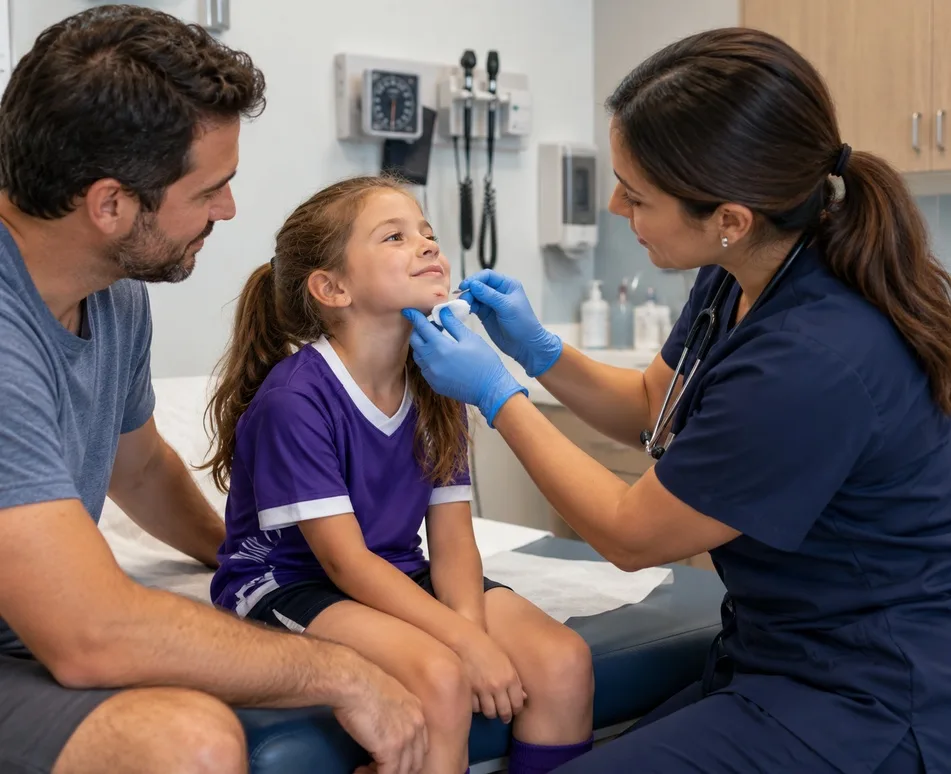
Sometimes the question is simply which door to walk through. We recently had a father come in with his daughter, who had cut her chin in a collision with a teammate at soccer practice. He did not know whether she needed stitches or a trip to the ER, and he wanted someone to look at it and help him decide. That is exactly the kind of moment a walk-in clinic is for.
What should you bring to a walk-in clinic for a fast visit?
Bring a photo ID, your insurance card, a list of the medications you take, and any allergies you have. Those four things handle most of the paperwork before it can slow you down.
A few extras help. Write down when your symptoms started and what you have already tried, because it is easy to forget details when you feel sick. Have the name and location of your preferred pharmacy ready so a prescription can go straight there. Parents should bring the child's insurance card and stay for the visit. Visitors should know their hotel address and the name of a pharmacy close to it. If you can, call ahead first. We can tell you what to expect when you arrive.
Feeling sick or hurt and not sure where to go? Call us at (407) 713-6010 or contact our walk-in clinic today, and we will help you get the right care, fast.